
Codenotary Previews AI Platform for Autonomous IT Remediation
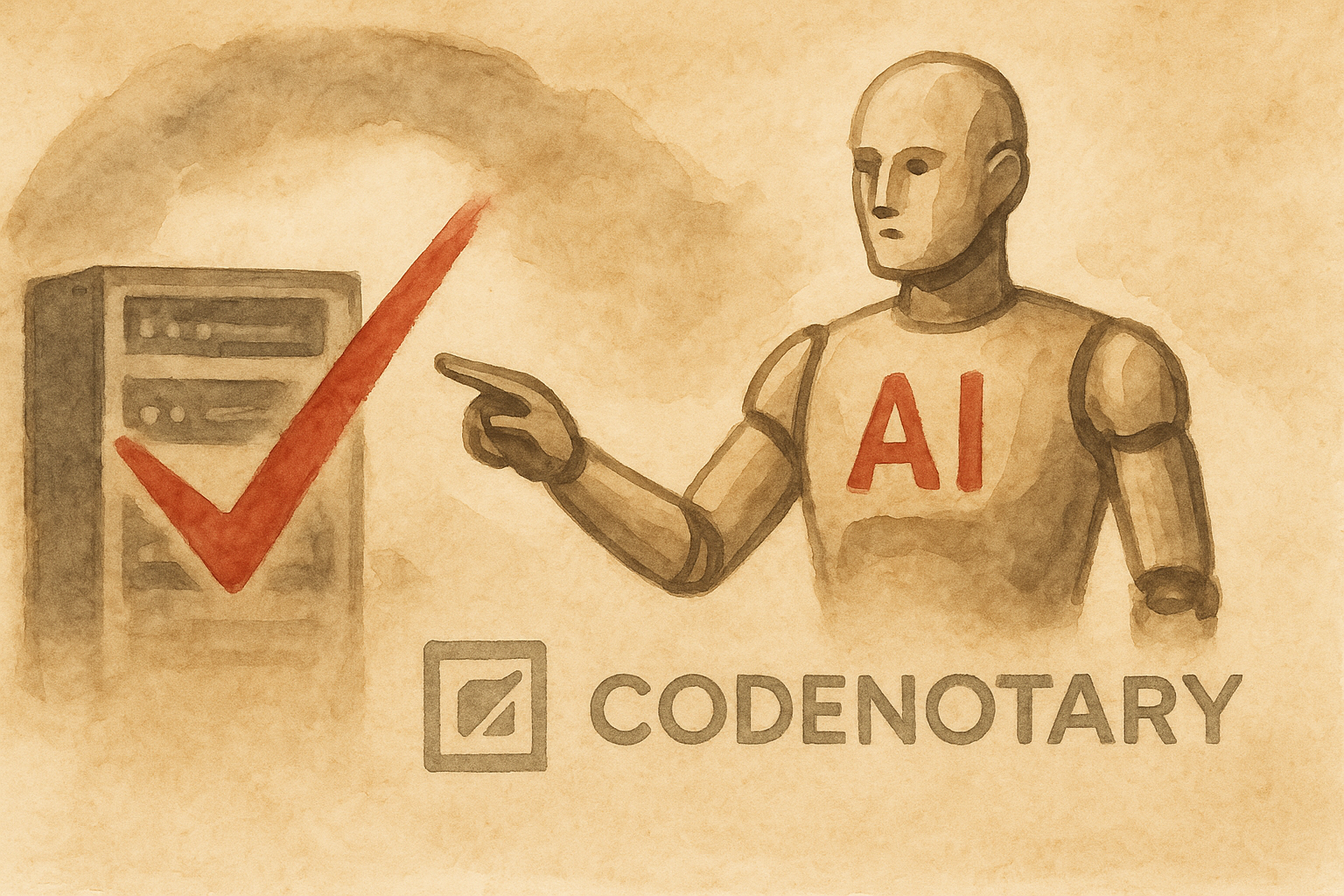
Codenotary, known for its software supply chain security tools, is previewing Trustcenter AI – a SaaS platform using AI agents to autonomously detect, prioritize, and fix security vulnerabilities, misconfigurations, and performance issues across IT infrastructure.
- The platform continuously monitors environments and applies AI-driven remediation without requiring manual intervention, shifting IT ops from reactive to proactive.
- Trustcenter AI leverages Codenotary’s immutable ledger technology to maintain a tamper-proof audit trail of all changes and fixes applied by AI agents.
- The solution targets enterprises looking to reduce mean time to remediation (MTTR) and alleviate pressure on understaffed IT and security teams.
As AI-driven autonomous remediation matures, IT leaders should evaluate how these tools can shrink response times and free teams for strategic work – while weighing governance risks of automated changes.
🛡️ Cybersecurity News
Uptycs announced a partnership with SAP to deploy its Juno AI analyst platform, which acts as virtual employees to help enterprise security teams. The collaboration focuses on verifiable AI analysts for cybersecurity operations.
Cisco identified two Catalyst SD-WAN Manager security flaws being actively exploited in the wild. Administrators are urged to upgrade vulnerable devices immediately.
🌩️ Cloud News
AWS announced Amazon Connect Health, an AI solution designed to reduce administrative workloads for healthcare providers. The platform automates routine operational tasks and improves patient access to care.
🧠 AI News
Microsoft released Phi-4-reasoning-vision-15B, a hardware-efficient reasoning model with 15 billion parameters that can process multimodal files. The model is based on SigLIP-2 and Phi-4 Reasoning algorithms.
📈 M&A News
Lio raised a $30 million Series A led by a16z for its AI agents that automate enterprise procurement, including document reading and supplier evaluation.
Broadcom reported financial results that exceeded Wall Street expectations, with its AI chip business jumping 106%. The company provided solid guidance for the current quarter, boosting its stock 4% in extended trading.
⚙️ DevOps News
Sonar launched the Agent Centric Development Cycle (AC/DC) framework at its online summit to modernize continuous integration in the age of AI coding. The framework incorporates multiple tools and platforms for AI-assisted development workflows.
🏗️ Infrastructure News
Three data centers have been damaged in drone strikes, and analysts warn such facilities are increasingly at risk during warfare.
💻 IT News
Microsoft is reportedly working on Windows 12 for 2026 with NPUs, deeper Copilot integration, and enhanced security features. This comes as millions of PCs approach the Windows 10 support deadline.
Cisco showcased AI advances in its unified communications and collaboration offerings at Cisco Live EMEA, emphasizing security, digital resilience, and data sovereignty for European businesses. The updates support hybrid work environments.
👔 Hiring News
Over 127,000 workers at U.S.-based tech companies were laid off in mass job cuts in 2025, and layoffs have continued into 2026. Tracking covers the latest companies to reduce headcount.
🏢 Top LLM Integration Agencies
AI Incidents Are Breaking Traditional ITOps Playbooks
With 88% of organizations now running AI, traditional incident management is falling short. AI systems fail in non-deterministic ways – model drift, hallucinations, data pipeline issues – that classic runbooks and static thresholds simply cannot detect or resolve.
- AI incidents often lack clear error signals. Output quality degrades silently, meaning teams need observability tools purpose-built for model behavior, not just infrastructure health.
- Traditional MTTR metrics miss the mark for AI. Resolution requires cross-functional response spanning data engineering, ML ops, and platform teams – demanding new roles and escalation paths.
IT leaders must retool incident frameworks, invest in AI-aware observability, and build cross-functional response teams now – or risk silent AI failures eroding business outcomes.

🎧 Latest Podcasts
🎧 Mar 5, 2026
🎧 Mar 5, 2026
🎧 Mar 5, 2026
🎧 Mar 4, 2026
🎧 Mar 5, 2026
🎧 Mar 4, 2026
🎧 Mar 4, 2026
🎧 Mar 4, 2026